
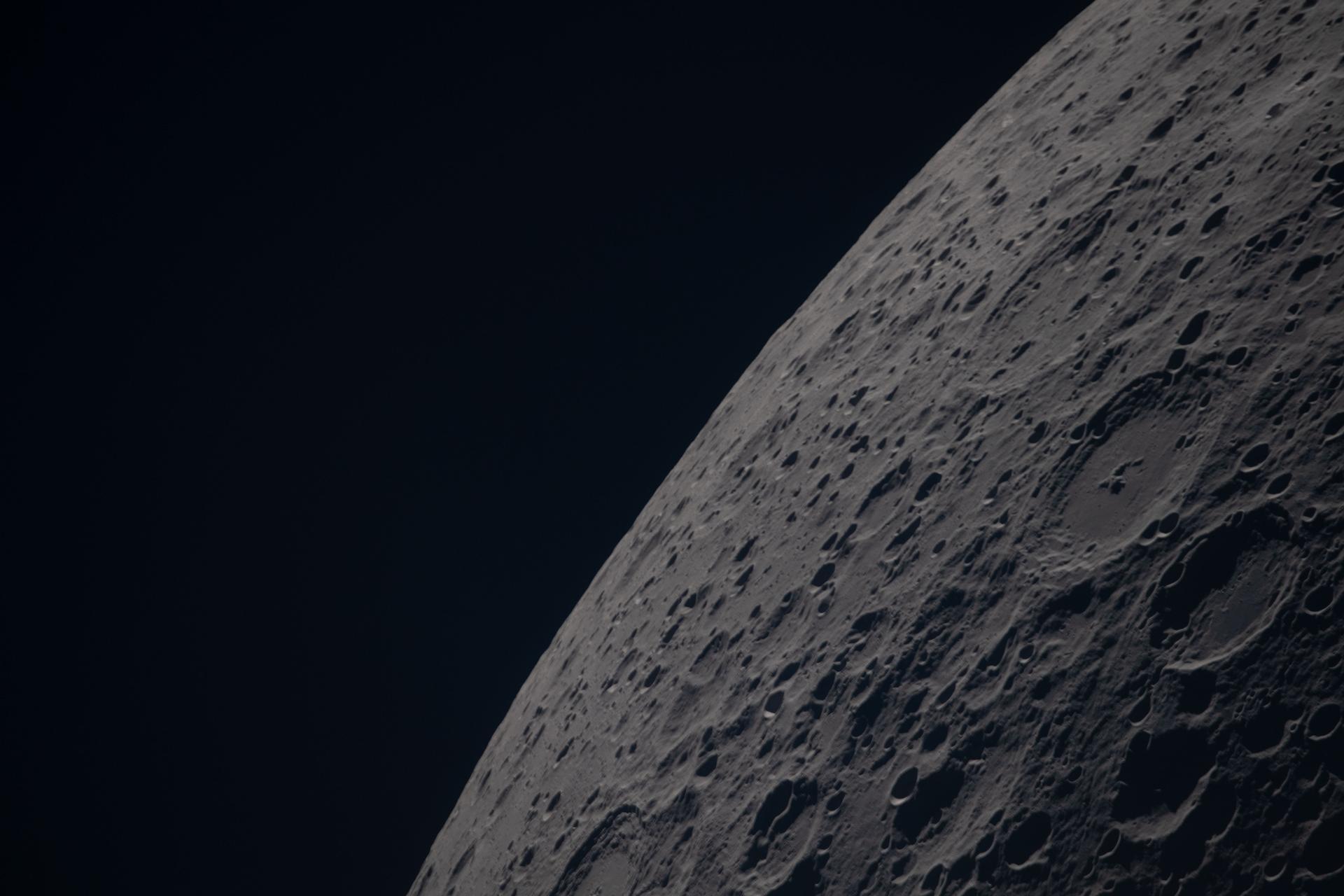
The science from every Moon rock sample, lunar dataset, and discovery produced through NASA’s Artemis program will be shared by the agency with the global scientific community. That commitment is upheld by all 71 countries that have signed the Artemis Accords, a set of principles for safe and transparent civil space exploration.
NASA put those principles into practice by hosting
a two-part virtual workshop series that began July 28
and concluded Sept. 8, focusing on one key tenet
of the Artemis Accords: the timely release of scientific data
to the public and the international scientific community.
“As we return humans to the Moon, our Artemis efforts
will help us unlock the full potential of scientific discovery
through transparency, collaboration, and accessibility,”
said Jacob Bleacher, chief exploration scientist at NASA.
“We are making data, tools, and results freely available,
and inviting the Artemis Accords partners to innovate with
us and share their data as well, accelerating our understanding
of lunar processes and laying the groundwork for human
space exploration for the Moon, Mars and beyond.”
The two recent workshops added to discussions led
by the ISRO (Indian Space Research Organisation) in May,
when signatories first explored ways to advance open
data practices and created common ground for deeper
conversations on open data. NASA split its follow‑on discussion
about data sharing into two virtual sessions, so technical experts
around the world could take part.
The agency hosted its first session on open science principles
and implementation practices. It promoted interoperability
and collaboration among signatories and advanced reproducibility,
accessibility, and transparency in scientific work,
including in NASA’s Artemis program.
The second session focused on tools for open science,
providing Artemis Accords signatories with a working model
to reference as they build or refine their own data-sharing frameworks.
“NASA is committed to leading by example when it comes to
open science,” said Andrew Mitchell, deputy chief science data officer
for NASA’s Science Mission Directorate, whose office
leads the agency’s open science efforts. “These workshops
gave our Artemis Accords partners practical tools
and a shared foundation to build on as we move forward together.”
NASA presented the Planetary Data System,
one of the agency’s primary archives for planetary science data,
openly available lunar data, data visualization and analysis tools,
and the system’s data information model standard,
offering a real-world example of how NASA structures,
curates, and shares scientific data with the world.
Across both sessions, NASA shared practices
developed over years of stewarding scientific data and
opened the floor to technical experts across the
Artemis Accords community, reflecting a deliberate
effort to build alignment at the working level.
“Advances in technology help enable open science,
but technology alone is insufficient,” said Mitchell.
“Open science requires a shift to a more transparent and
collaborative scientific process, which will increase
the pace and quality of scientific progress.
Scientific processes and results should be as open and
repeatable as possible to encourage further study.”
In 2020, NASA and the State Department joined
with seven other founding nations to establish the
Artemis Accords in response to the growing interest
in lunar activities by both governments and private companies.
They introduced the first set of practical principles aimed at enhancing
the safety and coordination between like-minded nations
as they explore the Moon, Mars, and beyond, committing nations to:
- explore peaceably and transparently
- render aid to those in need
- enable access to scientific data
- ensure activities do not interfere with those of others
- preserve historically significant sites and artifacts
- by developing best practices
By signing the Artemis Accords, nations open the
door to opportunities for future lunar exploration with NASA,
advancing humanity’s return to the Moon, and shaping the
Golden Age of space exploration and innovation.
Learn more about the Artemis Accords at: