Relax with Nature

Friday, August 21, 2026

Recent global science, technology, and innovation (STI) policies

Recent global science, technology, and innovation (STI) policies focus heavily on managing the rise of artificial intelligence, shifting geopolitical cooperation, and driving green transitions through agile frameworks and open science. Major international bodies like the OECD Science.       Technology  and Innovation Outlook and  UNCTAD  emphasize that modern policy must adapt faster via regulatory sandboxes and inclusive public-private partnerships

Key Global Trends in STI Policy
  • Artificial Intelligence & Frontier Tech: Integrating AI, quantum computing, and synthetic biology into national R&D priorities while establishing responsible data governance.(1.2)
  • Mission-Oriented Funding: Moving away from siloed sector grants toward challenge-driven public investments targeting climate change, health security, and sustainable energy
  • Geopolitical Reshaping: Adapting international scientific cooperation and supply-chain resilience (such as semiconductors) to address shifting global tensions.   (1,2) 
  • Open Science Frameworks: Expanding public access to publicly funded research data and democratizing knowledge sharing via platforms like the  UNESCO Open Scienc      platform (1 ,2, 3 )
  • STI Parks & Incubation: Scaling up science, technology, and innovation parks to bridge the gap between academic research and commercial startup ecosystems.🇮🇳 India: Decoupling Bureaucracy & Driving Multi-Lateral Innovation

  • In India: Decoupling Bureaucracy & Driving Multi-Lateral Innovation
    India's recent science, technology, and innovation frameworks focus heavily on self-reliance (Atmanirbhar Bharat), commercializing deep tech, and relaxing historic regulatory bottlenecks
  • India's recent science, technology, and innovation frameworks focus heavily on self-reliance (Atmanirbhar Bharat), commercializing deep tech, and relaxing historic regulatory bottlenecks.     (1,2)
    • The Anusandhan National Research Foundation (ANRF): Operating as a central body, the  ANRE serves to bridge the gap between academia, state research labs, and private industries, ensuring that public R&D spending transitions directly into commercialized patents.    (1) 
    • "Ease of Research" Policy Reforms: To address bureaucratic hurdles, the government enacted major administrative overhauls. These doubled financial spending ceilings for institutional research directors and authorized universities to bypass government e-marketplaces for highly specialized, global scientific equipment. (1)
    • Strategic and Mission-Mode Tech: The Vigyan Dhara Scheme consolidated isolated funding tracks into a cohesive national priority framework targeting critical fields: Semiconductors, Green Hydrogen, Quantum Computing, Deep-Tech, and Space Expansion (such as the successful Spadeex docking mission and human spaceflight infrastructure).   (1,2)
    • Global Leadership: Serving as the BRICS 2026 Chair, India's Ministerial Meetings are steering cooperative framework architectures toward "Building for Resilience, Innovation, Cooperation, and Sustainability". (1,2)
    United States: Techno-Strategic Competition & Supply Chain Resilience
    US STI policy has firmly pivoted to treat scientific innovation as an explicit sub-discipline of national security, economic independence, and military superiority. [1, 2]
    • National Security Science & Technology Strategy (NSSTS): Released directly by the White House Office of Science  and Technology Policy   (OSTP)   this strategy aims to redirect federally funded R&D to complement private market capital rather than compete with it. The document dictates four core pillars: Focusing Techno-Strategic Competition, Building Technological Resilience, Accelerating Commercial Adoption, and Protecting Ecosystems from Foreign Theft.
    • Refining Critical Technologies: The US revised its official Critical and Emerging Technologies list down from 18 to 14 foundational categories, hyper-focusing attention on Post-Quantum Cryptography, 2D Materials, High-Entropy Alloys, and Hardened Operating Systems.
    • CHIPS Act Pressures: As the 2026 fiscal deadline approaches for allocating incentives under the CHIPS and Science Act, the US Department of Commerce faces critical pressure to deploy final commercial semiconductor fab funding amidst shifting executive scrutiny, labor shortages, and strict environmental compliance deadlines.
    • In 
      Sri Lanka: Structuring Ecosystems & Forging Bilateral Links
      Faced with a historically low Global Innovation Index (GII) score driven by weak university-to-industry partnerships and minimal patent pipelines, Sri Lanka is leveraging structural restructuring and regional cooperation to revive its tech landscape.(1)
      • New National R&D Policy Formulation: Orchestrated through the National Innovative Agency National Innovation Agency  (NIA) and the Ministry of Science and Technology, Sri Lanka has designed a refreshed national blueprint aimed at boosting private sector engagement and offering tax incentives for industry-sponsored university laboratories.
      • Bilateral Indo-Sri Lanka Integration: Lacking individual domestic venture funding at scale, the country has paired with regional powers. The Indo-Sri Lanka Joint Research Programme recently formalized collaborative funding across dozens of research tracks and environmental workshops, establishing shared labs to tackle localized climate, agricultural, and energy crises.
      • National Academy Trust Initiative: Backed by corporate giants (such as Dialog Axiata and Commercial Bank), the National Academy of Sciences of Sri Lanka  (NASSL)  launched an overarching program running through 2028 to explicitly rebuild "trust in science" and funnel entrepreneurial investments into digital tech infrastructure, satellite engineering, and high-quality human resource training  (1,2,3,4,5,6,7)

Wednesday, December 24, 2025

3I Atlas is a gigantic Alien Ship


Breaking news from the frontiers of space! Renowned theoretical physicist Avi Loeb has made a stunning claim about the mysterious object 3I/ATLAS, initially thought to be a comet. According to Loeb, the latest images captured by the Hubble Space Telescope reveal that this is not a natural celestial body but a gigantic alien spacecraft approaching our solar system.


The Hubble images show a clearly defined structure that experts say is inconsistent with a typical comet. Its unusual shape and geometry suggest an artificial origin, making it one of the most extraordinary potential discoveries in the history of astronomy. Loeb insists that the object could be evidence of an advanced extraterrestrial civilization, urging scientists and the public alike to monitor it closely.

While astronomers worldwide have been tracking 3I/ATLAS since it entered our solar system, the possibility that it is a non-terrestrial construction raises questions about how prepared humanity is to understand or respond to such a phenomenon. NASA has confirmed that it is actively monitoring the object and using all available resources to study its trajectory and properties.

This revelation challenges our understanding of the universe and the potential for intelligent life beyond Earth. If confirmed, it could mark the first direct contact with a technologically advanced alien civilization and reshape how we see our place in the cosmos.

Stay alert, because the universe may be sending a message, and humanity could be witnessing a historic cosmic encounter like never before.


Source   Fb

Sunday, December 21, 2025

Lack of sleep causes human brain to literally eating itself


During deep sleep, the brain performs essential repair work, clearing waste and stabilizing neural connections.

When sleep is reduced, brain immune cells increase activity and begin breaking down synapses more aggressively than normal.

This process, beneficial in controlled amounts, can become harmful when triggered repeatedly by chronic sleep loss.

Studies link insufficient sleep to impaired focus, emotional instability, weakened memory, and increased neurological risk.

The urgency is becoming impossible to ignore: modern lifestyles consistently sacrifice sleep while neurological and mental health disorders continue to rise worldwide. With growing evidence that chronic sleep deprivation accelerates cognitive decline and disrupts brain structure, restoring adequate sleep may be one of the most effective steps for preserving long-term brain health and functional stability.

 source: fblifestyle

Wednesday, December 10, 2025

God is Real


A bold claim from a Harvard scientist has sparked global debate: he believes he has identified a mathematical formula that could prove the existence of God. The idea is rooted in the search for patterns and constants within the universe that suggest intentional design rather than random chance. 

Mathematics is often described as the “language of the universe,” governing everything from the spirals of galaxies to the symmetry of snowflakes. The researcher argues that recurring numerical relationships — such as the golden ratio and fine-tuned physical constants — point toward a higher intelligence. 

While critics caution that such claims mix philosophy with science, the discussion itself highlights humanity’s deep quest to understand life, creation, and purpose. The formula, if validated, could change how both science and spirituality approach the ultimate question of existence. 

Whether fact or faith, the idea invites us to reflect on how numbers might hold the key to the universe’s greatest mystery. 

#ScienceAndFaith #HarvardResearch #MathematicsOfGod #UniverseDesign #MechanicalEngineersRocks


Mysterious creature on Mars ,Universal Mystery


Alien Creature Caught on Camera


A shocking discovery has just made headlines worldwide. A mysterious creature has been spotted running across the Martian landscape. The image shows a strange, alien-like figure with a skeletal build, sprinting across the red soil of Mars. The creature’s form, coupled with its movements, raises questions about life beyond Earth. Could this be the evidence of extraterrestrial life we’ve been waiting for? The possibility that such beings could exist on another planet is thrilling, but many scientists are skeptical and want to dig deeper into theorigins of this phenomenon.
The Martian surface is harsh, and no biological life as we know it can survive in its current conditions. However, scientists have speculated about the existence of microbial life or even more complex organisms that might exist deep beneath the planet's surface. This creature, if real, would open up a world of possibilities and theories about how life can adapt to extreme environments. Its movements seem too intentional to be a random formation of rocks or dust, suggesting that it could be an organism with mobility and purpose.


The footage, which was captured by an advanced rover, is being analyzed by experts who are carefully examining the creature’s anatomy. The legs and body structure resemble a bipedal creature, but its skin appears smooth and almost translucent, raising more questions than answers. Some theorists suggest that this could be a new form of life that has evolved under Mars' unique conditions. Could this creature be a remnant of an ancient civilization that once thrived on Mars?

The debate continues to rage among scientists. Some believe this could be an optical illusion or even a well-timed dust storm that created the appearance of a moving being. However, the alignment and motion of the creature have experts scratching their heads. No conclusive evidence has yet been provided to support the notion of alien life on Mars, but this footage has reignited interest in the possibility of extraterrestrial beings. As technology improves and more missions are sent to Mars, the truth may one day come to light.

As of now, the discovery of this strange creature remains an unsolved mystery. It will take more analysis, study, and exploration to determine whether this is truly a new form of life or simply a trick of the mind. Until then, the search for extraterrestrial life continues, and the fascination with Mars and its secrets only deepens. This discovery, however strange, might just be the breakthrough humanity has been looking for in its quest to uncover the mysteries of the universe.

Thursday, December 4, 2025

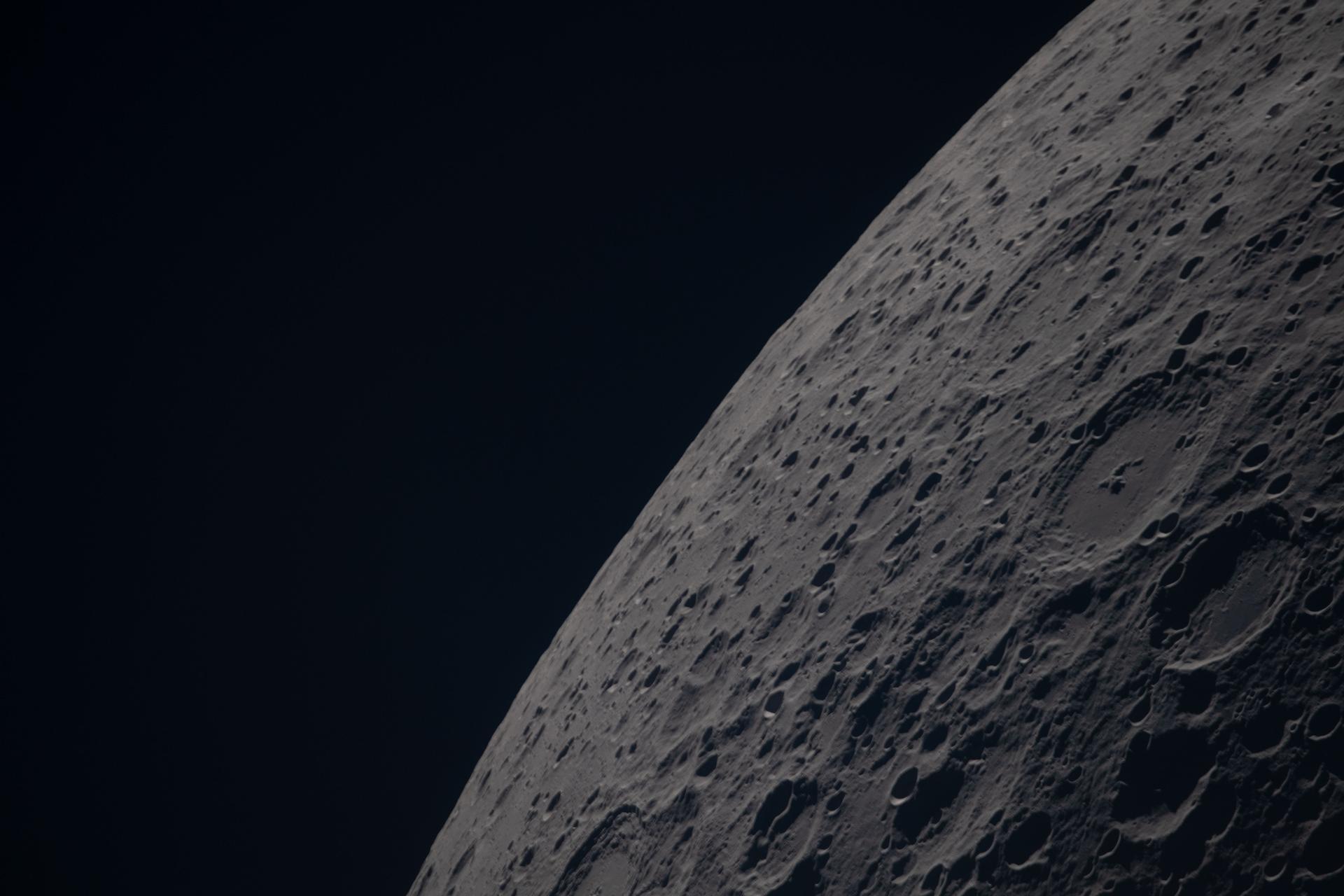
Moon is shrinking

In a startling revelation, NASA has confirmed that the Moon is slowly shrinking, and the process is producing mysterious “screaming” sounds detectable by scientific instruments. This discovery has ignited curiosity and even a bit of fear among space enthusiasts and astronomers worldwide. While the idea of a silent, serene Moon has captivated humanity for centuries, it turns out that our celestial neighbour is far from quiet.

The Moon’s shrinking is caused by its interior cooling over billions of years, which makes the surface contract. This contraction creates deep cliffs, known as lunar scarps, that can stretch hundreds of miles long and soar thousands of feet high. As these cliffs shift and crack, the Moon literally “screams,” producing seismic signals that scientists have detected using instruments left behind by the Apollo missions. These lunar quakes may seem subtle, but they reveal a dramatic and active geological process 
                                                                                                                happening right on our nearest cosmic neighbour.

This discovery changes the way we perceive the Moon. It is not just a static, unchanging satellite; it is a dynamic world, reshaping itself slowly over eons. The cracking and shifting of the lunar surface also provides crucial insights for future Moon missions, especially for astronauts who will need to navigate this evolving terrain. Understanding these processes helps scientists prepare for long-term exploration and potential colonisation, making the Moon not just a subject of study but a frontier of human adventure.

Beyond science, the idea that the Moon is “screaming” adds a hauntingly poetic layer to our connection with it. Every full Moon, every lunar eclipse, now carries a subtle reminder that our Moon is alive in its own unique way. It is a cosmic orchestra of geological activity echoing through space, waiting for humanity to listen more .
 Source  News FB